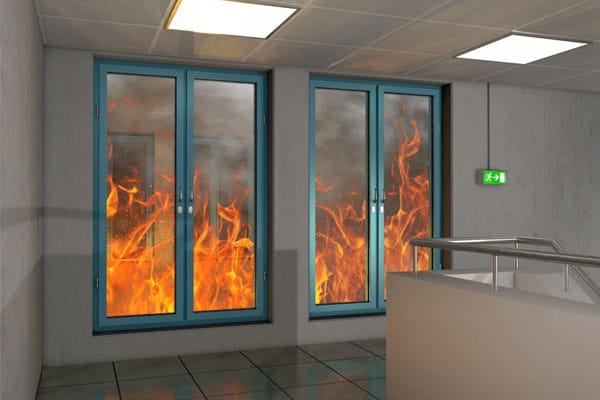
Fire safety is often treated as a compliance requirement—something to be checked off once construction is complete. But this approach is fundamentally flawed. In reality, fire safety is a design discipline, not a post-construction adjustment.
When safety is retrofitted, it creates gaps. When it is designed in from the beginning, it creates resilience.
The Cost of Late-Stage Thinking
In many projects, fire safety decisions are delayed until execution or even handover stages. At this point:
- Structural layouts are already fixed
- Material choices are locked
- Budgets are stretched
This results in compromised solutions—improvised fire doors, poorly integrated systems, and limited testing of real-world scenarios.
More importantly, retrofitted safety measures often fail under stress because they were never part of the original system design.
Design-Led Fire Safety: What It Means
A design-first approach ensures that fire safety is embedded into the DNA of a building. This includes:
1. Integrated Material Selection
Choosing fire-rated doors, partitions, and materials early ensures compatibility with the overall architecture and performance requirements.
2. Defined Compartmentalization
Fire containment works best when spaces are designed to limit spread. Fire-rated doors and barriers are strategically placed—not randomly installed.
3. System-Level Thinking
Fire safety is not just about products—it’s about how systems interact:
- Doors
- Alarm systems
- Ventilation
- Escape routes
A design-led approach ensures these elements work together seamlessly.
Why It Matters More Today
Modern infrastructure is more complex than ever:
- High-rise buildings
- Data centers
- Pharma facilities
- Hospitals
These environments demand precision. A single failure point can have cascading consequences—not just financially, but in terms of human safety.
The Role of Fire-Rated Doors
Fire-rated doors are a critical component of passive fire protection. But their effectiveness depends on:
- Proper specification
- Correct installation
- Compatibility with surrounding systems
A door is only as effective as the ecosystem it operates in. When included during the design phase, fire-rated doors:
- Enhance evacuation safety
- Contain fire and smoke
- Protect critical zones
Leadership Perspective: Moving Beyond Compliance
Organizations that lead in safety don’t treat it as an obligation—they treat it as a
responsibility.
This shift requires:
- Early-stage involvement of fire safety experts
- Collaboration between architects, engineers, and manufacturers
- Collaboration between architects, engineers, and manufacturers
It also requires a cultural change—from “meeting standards” to building safer environments by design. Because in fire safety, timing is everything. And the right time to think about safety is before the first brick is laid.